


Dallas Willard believed the responsibility to teach the knowledge of Christ falls upon everyone who identifies as a spokesperson for him. In Knowing Christ Today, he lays out that vision and is careful to say that the word “pastors” covers far more than ordained clergy:
“I shall use the word ‘pastors’ for such people, but the word is here to be taken very broadly; it refers not just to those who hold a position with that title.”
The work of teaching the nations belongs to all of Christ’s people, wherever they are, in whatever vocation they occupy. The early disciples, Willard reminds us, were first-class nobodies with no institutional power and no organizational backing. Their method was, in his phrase, “speaking and being.” They spoke the truth about Christ and their lives confirmed what they said. That was enough to turn the world over.
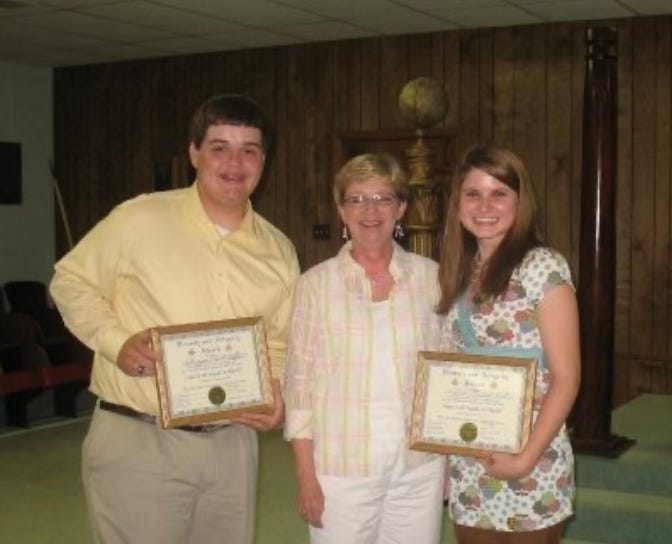
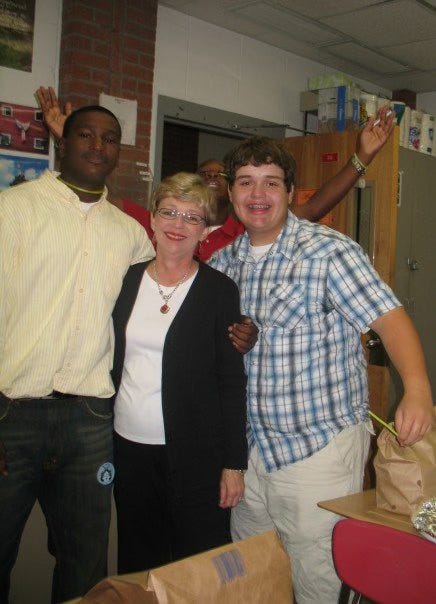
Peggy Brooks was that kind of person. She taught me English at Ouachita Junior High and Ouachita High School in Monroe, Louisiana in 7th, 8th, 10th, 11th, and 12th grade. She was my mentor, a lifelong friend, and other than my parents has had the most direct impact on the direction of my life. On Friday I officiated her funeral, and since her passing a week ago I have been thinking continually about the impact of her life.
Work as the Location of Discipleship
Willard argues that life is devoted to work, and that all legitimate work is devoted to creating what is good. He traces that conviction back to creation: God not only creates, he creates creators. Your vocation is a location where you participate in that creating. Disciples of Jesus carry the kingdom of God into their work.
“Divine service is not a church service, though it might include that. Divine service is life. It is in the world, in daily business of whatever level and importance, that there unfolds... ‘the great adventure that was once Christianity.’”
Mrs. Brooks taught grammar and vocabulary and Shakespeare and Tennessee Williams. She graded papers and planned parties and handed unruly junior high boys a John Grisham novel when they needed to burn off energy a desk couldn’t contain. She organized end-of-year ceremonial burnings of vocabulary books and stood outside grinning while the smoke rose.
All of it was a woman spending her days as an apprentice to Christ inside a public school in north Louisiana, creating what is good in the name of the One she loved.

Speaking and Being
Mrs. Brooks was a teacher, but the word undersells what she offered. She offered a life. Willard says the disciples extended Christ’s presence throughout the earth through abilities not entirely their own — the Holy Spirit upon them, working through their speaking and their being. That is a description of what it felt like to be in her classroom.
She practiced grace on students who couldn’t get it together, kept the door open, and kept expecting something out of you even when you had given her no reason to. She sang about Christ in her classroom and in church choirs with the unselfconscious joy of a person actually changed by what she believed. She honored her marriage, bragged on her children and grandchildren in rooms they would never walk into, and bore the character of Christ so consistently that you absorbed it before you knew what was happening to you.
One afternoon during my senior year, she told me that if I did anything other than ministry I would be wasting my life. I had no intention of being a pastor. She said it anyway, because she had seen something in me I hadn’t seen yet, and she had the courage to name it. A spokesperson for Christ speaks the truth into a life still being formed and trusts God to do something with it.
For the Rest of Us
Willard’s point stands for all of us. You are a spokesperson for Christ in your occupation. The teacher, the farmer, the nurse, the business owner, the coach — every legitimate vocation is a location for the kingdom of God to become visible through a person who has surrendered their will to Jesus and gone to work.
The writer of Hebrews says: “Remember your leaders, those who spoke to you the word of God. Consider the outcome of their way of life, and imitate their faith.”
The outcome of Peggy Brooks’ way of life was a pastor she told the truth to before he knew he was going to be one, hundreds of students who learned something true about what it means to be human, and a depth of influence that runs beyond anything she could have seen from the front of a classroom in Monroe.
The great adventure Willard describes is available to you, in your classroom, your clinic, your field, your kitchen, your shop. You don’t need a platform. You need to be present, doing good work, in the presence of the One who is the same yesterday and today and forever.
Mrs. Brooks, thank you. Thank you for teaching us more than English and Language arts, thank you for showing us the Kingdom of Heaven.
For Reflection
Willard says divine service is life, not a church service. What would it look like to bring that conviction into your work this week?
Who around you needs someone to speak the truth into their life before they can see it themselves?
Whose way of life do you need to consider and imitate? Take a few minutes to name them and thank God for them.