


Near the end of 2019 I was told I needed to look for other opportunities. For seven years I had poured myself into a career in Christian higher education alongside a PhD in Pastoral Theology. In 2018 I had landed what had been, until then, my dream job. I was content. I was convinced the best days were ahead, and that I would climb from that comfortable place to still greater heights. I was wrong.
2020 proved one of the hardest years of my life. In a few short months I found myself in a town where I knew no one but my in-laws, working a remote sales job for a marketing firm, doing a poor job of keeping it all together. I was a mess. My sense of purpose had been tied to my work, and I could not find it in the new role. I was angry, bitter, depressed, and suicidal.
In that desperation I picked up Dallas Willard’s Life Without Lack, a reflection on Psalm 23 that began to restore my soul. I do not remember why, but the next book I picked up was Eugene Peterson’s Practice Resurrection. In those pages I found a poet who would teach me a great deal about the man I was to become. I did not know it yet, but I was about to be pastored by a man I would never meet.
Peterson takes his title from the last line of Wendell Berry’s Manifesto: The Mad Farmer Liberation Front. Heeding Dallas’s encouragement to read deeply, I read and reread Berry’s poem. After I finished Practice Resurrection I started listening to Jayber Crow, not knowing a work of fiction would become a turning point in my life.
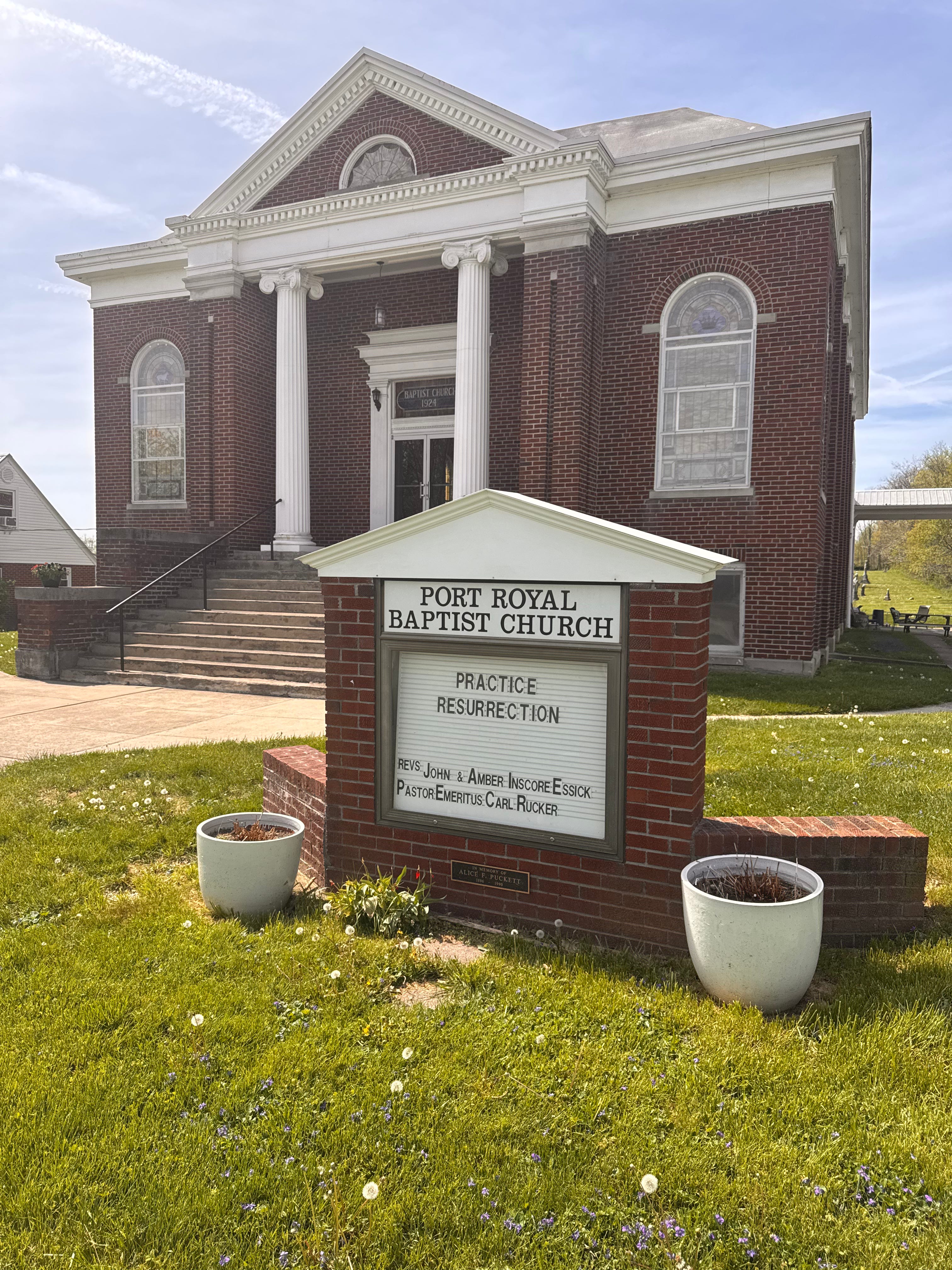
Jayber Crow follows an orphan, turned seminary dropout, turned barber. Jayber lives most of his life in the fictional town of Port William, Kentucky, Berry’s portrayal of his own Port Royal, and he is the storykeeper of the place. Not much happens there without Jayber catching wind of it from his chair. The story is as much about the place as it is about the man.
I remember one interstate drive to run some inconsequential errands, half listening to Jayber, when the narrative pulled me in and drove me to tears. In the chapter called The Beautiful Shore, Jayber adds church janitor and grave digger to his barbering. This seminary dropout, finding vocation in and around the church, returns to eternity, church, and community. Midway through the chapter Jayber turns to the preachers of Port William.
The preachers were always young students from the seminary who wore, you might say, the mantle of power but not the mantle of knowledge. They wouldn’t stay long enough to know where they were, for one thing. Some were wise and some were foolish, but none, so far as Port William knew, was ever old. They seemed to have come from some Never-Never Land where the professionally devout were forever young.
They were not in school to learn the pleasures and the pains of being there, or what ought to be said there. Those things are not learned in a school. “They went to school, apparently, to learn to say over and over again, regardless of where they were, what had already been said too often. They learned to have a very high opinion of God and a very low opinion of His works, although they could tell you that this world had been made by God Himself.”
I Longed for Sheep
Like any good Baptist boy I should offer the caveat that I have never heard the voice of God with my ears. These words may be the closest I have come. As Berry, through Jayber, details the frequent departure of young preachers toward a bigger and better place, I was crushed for that fictional town, and convicted of my own foolish pride. Until then, in my life and ministry, I had one ambition: make it big. When I first felt called to ministry I was certain I was in line to be the next camp and conference speaker, a Christian celebrity. Then, once I arrived in seminary and recognized that my face was made for radio, and that my boring disposition as a Bible teacher might keep me from the platform, I became convinced that my work ethic might at least make a name for me in the academy. All the while I claimed a call to ministry. What I wanted was to be well known.
My wife likes to remind me how silly all of this was. My course of study was Pastoral Ministry, and I never conceived of myself as a pastor. I wanted recognition. Through various trials the Lord began to free me of that hunger. Then, when Jayber spoke about the pastor for the first time, my heart was broken, and I realized what God had made me to be. A pastor. A shepherd. And as Jayber spoke I began to long for something, maybe for the first time. I longed for sheep.
Something in me changed that day. It was a conversion. Ministry, and life, would no longer be about me or my name. God grew a passion in me for people and for place that had been absent. I had no idea where the new conviction would take me, but I found, in Jayber’s words, who I was made to be. I am a pastor, or maybe better said, a pasturer. God crafted me to take care of the people and the place around me. Where I made a living was immaterial. I went on as a marketing-consultant pastor, and I was content to do that as long as the Lord saw fit. A pastor was who I was, and would be, and wherever I was would be my flock.
A Membership
Alongside the new commitment to the pastoral vocation came an awareness of place. The more I read Berry and Peterson, the more I realized that the places I had been, and the places I would go, would shape my family as much as anything else. I wanted a place we could call home. Somewhere like where I grew up, where I had an army of people who shaped me, not blood-kin but somehow deeper. Wendell had a word for this. What I longed for was a membership.
Jayber’s vision of the gathered church, the one that came to him after he became the janitor, gave way to a vision of the gathered community.
What I saw now was the community imperfect and irresolute but held together by the frayed and always fraying, incomplete and yet ever-holding bonds of the various sorts of affection.
I knew that, in the midst of all the ignorance and error, this was a membership; it was the membership of Port William and of no other place on earth.
And yet I saw them all as somehow perfected, beyond time, by one another’s love, compassion, and forgiveness, as it is said we may be perfected by grace.
A place to belong, even when we were not getting along. A place and a people to call my own, for my children and maybe their children to call their own. In Wendell’s stories the pastor is always the alien and the outsider. Even then God was stirring in me the desire to be somewhere and belong to it.
The Work Their Fathers Did
Over the next couple of years the Lord kept confirming the calling. He used some of the deepest pain I have felt, and the words of a few men who had a way of living in the world that would reshape how I wanted to live. Dallas Willard, Eugene Peterson, and Wendell Berry left a life their children could enter. They reshaped me into the man, the pastor, and the person I am today. I never met any of these men. They have been my mentors. In God’s kindness I have met each of their children. Becky Willard Heatley has become a dear friend and partner in ministry. I spent a long weekend with a small group of pastors and Eric Peterson. I will always treasure a trip to Port Royal with my friend and Wendell devotee Jesse Young, where I met Mary Berry.
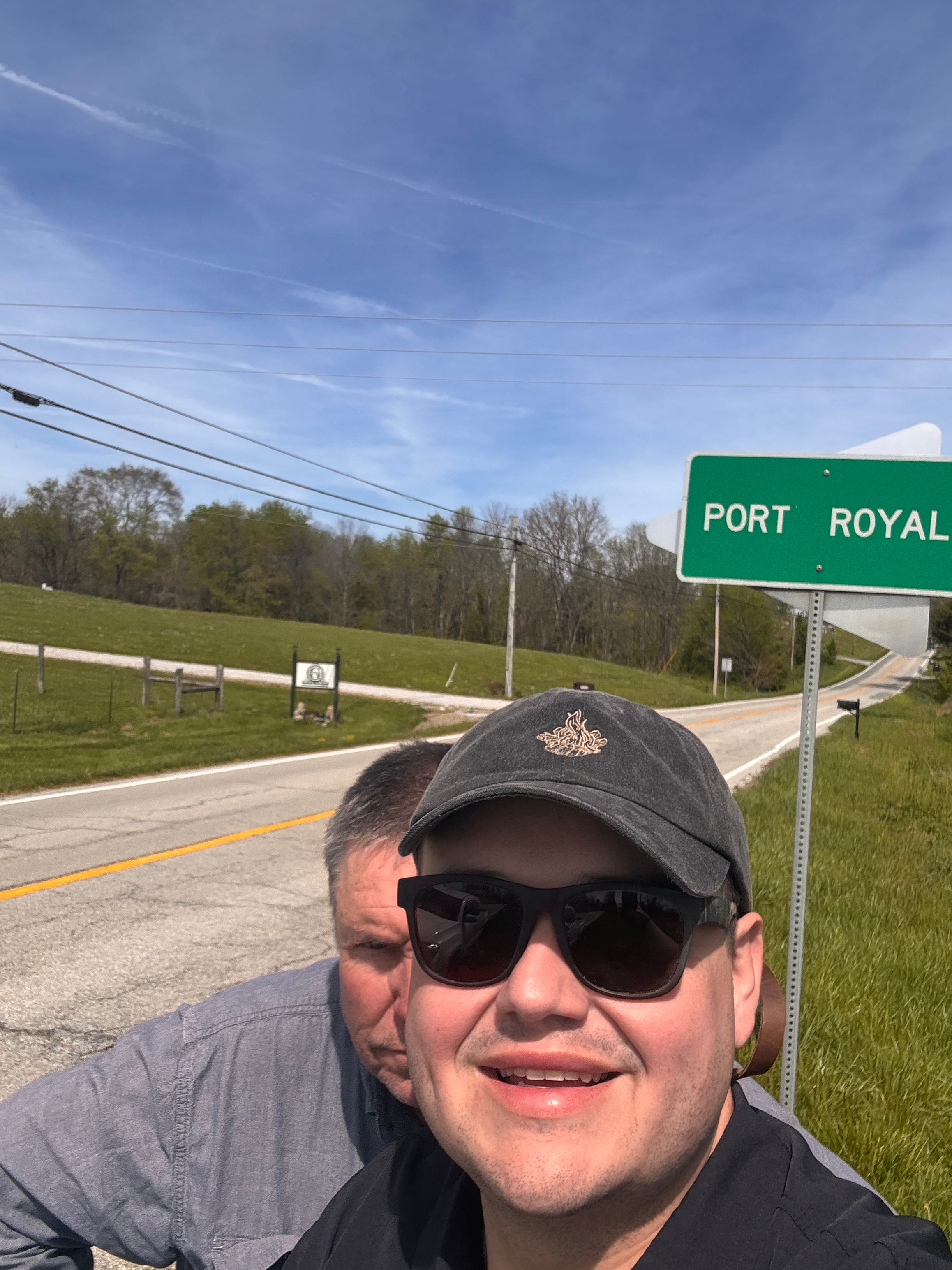
Those conversations confirmed that the work their fathers did was worth doing. The commitments their fathers made were worth living. They found in their father’s work a work of their own. As I think of these three men, and the influence they have had on my life and on their children, I can only pray my children find a similar calling. I am certain I will never reach as many readers as those men, and I do not desire that. I hope my own children can find a desire in themselves to do what their father has tried to do: find a place, commit to it, stay, share all they have, and belong. That belonging, being part of a place, is worth more than any ambition or pride.
I Was the Machine
Mr. Berry, I was the machine. Greater, bigger, better, that was the hunger. I was convinced I was headed for world conquest and notoriety, the poster child for gain and excess. Your words changed me, changed my family, changed my life. Every decision I have made since 2021, every direction I take my church and family, is filtered through the pastoral lens you helped me develop. How can I find pleasure in what I have instead of what I can get? Is this good for this place, at this time, for this people? How will this decision impact those who come after us?
Dallas Willard opens the last chapter of Knowing Christ Today, “Pastors as Teachers of the Nations,” with two questions.
Who is to bring the knowledge that will answer the great life questions that perplex humanity? Who is to teach the world, the “nations,” people of all kinds, the knowledge that belongs to Christ and his people? ... I shall use the word “pastors” for such people, but the word is here to be taken very broadly; it refers not just to those who hold a position with that title, though it is especially for them.
Thank you, Wendell, for being my pastor, for being our pastor. May you enjoy now participating in that which you helped us practice for, resurrection.
You are my pastor, Garrison Griffith! The language you write on the pages of your newsletters / Substack have brought me to humble tears and moves me to the ‘with God life’ as Dallas says. I tried reading Jaber Crow years ago and I just couldn’t get into it, am going to read it again with new eyes.
When reading the scriptures, it seems God has a strong affinity for shepherds. Abraham, Moses, David, Amos, shepherds in the field, to name a few. I am surprised that Jesus chose fishermen rather than shepherds.